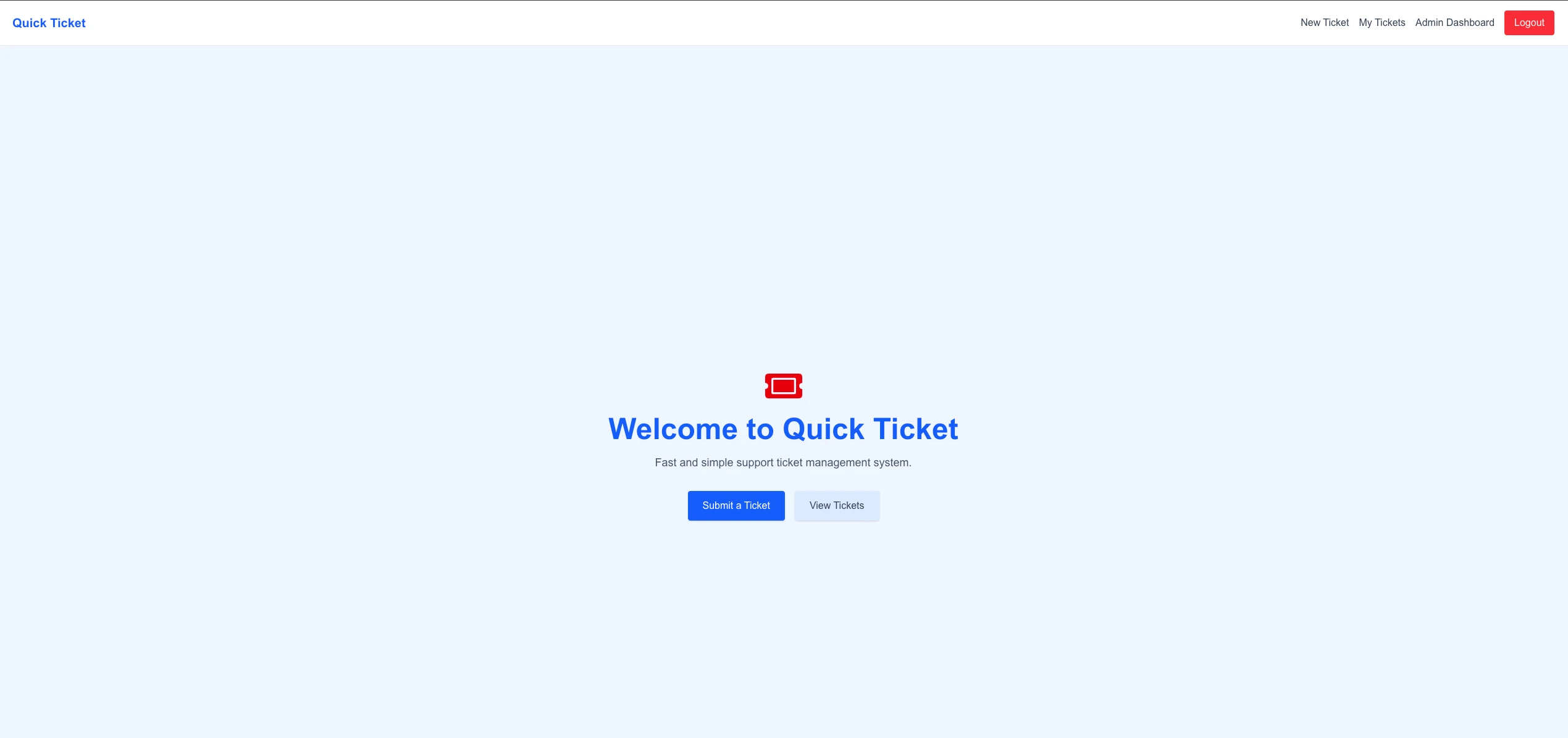
Quick Ticket
Eric Stober / March 5, 2026
Quick Ticket is a lightweight IT support ticket system built with Next.js, TypeScript, Prisma, and PostgreSQL. The goal of this project was to create a simple and efficient way for users to submit IT support requests while demonstrating a modern full-stack architecture.
The application allows users to submit support tickets through a clean interface while storing requests in a database for easy tracking and management. It also integrates error and performance monitoring using Sentry, providing visibility into runtime errors and application performance.
This project showcases how modern tools can be used to build scalable and maintainable web applications with production-ready observability.
The Problem
In many small environments or personal projects, submitting IT support requests often happens through:
- Chat messages
- Informal requests
This can make it difficult to:
- Track requests
- Organize issues
- Maintain a record of support activity
Quick Ticket was created to provide a simple centralized system for submitting and managing support requests.
The Solution
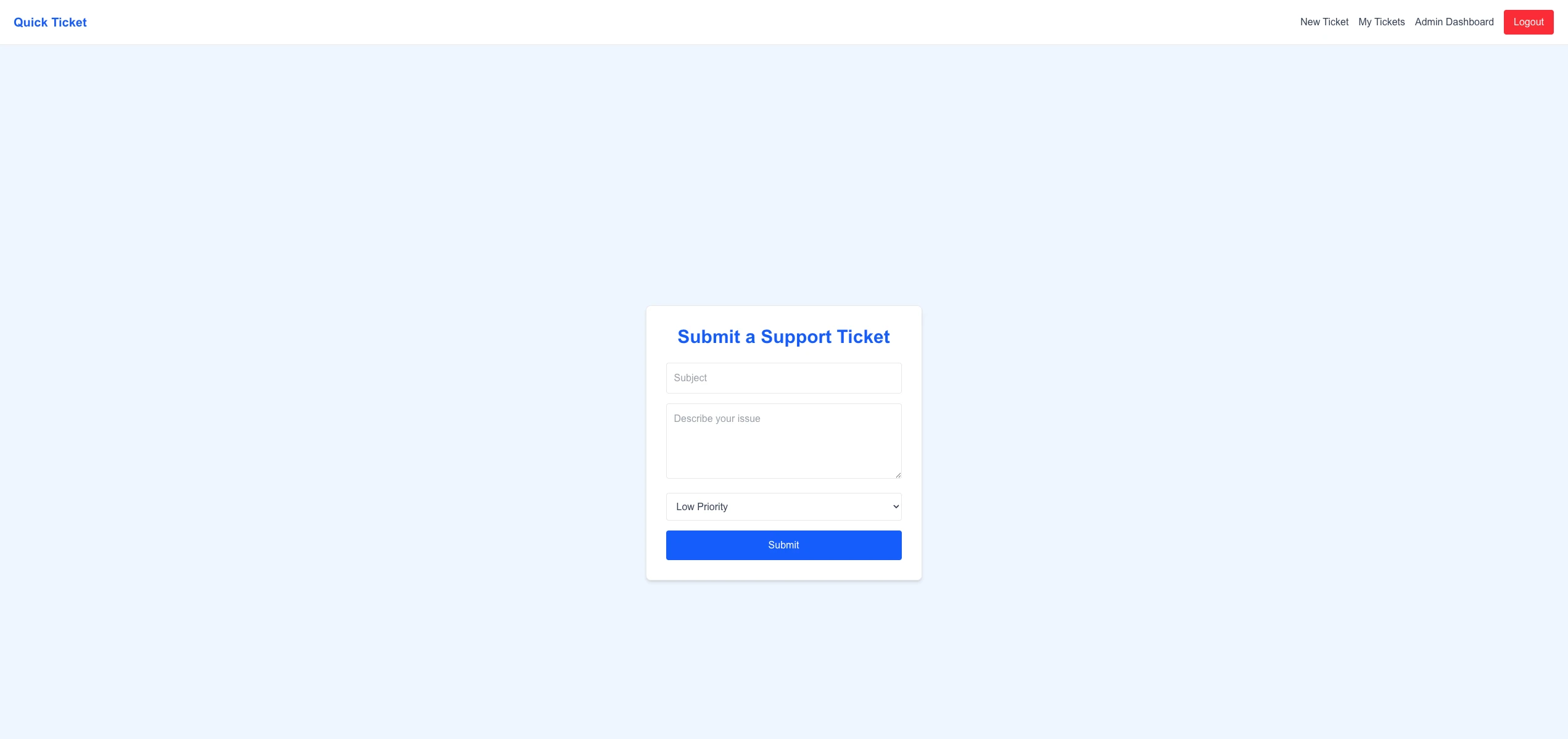
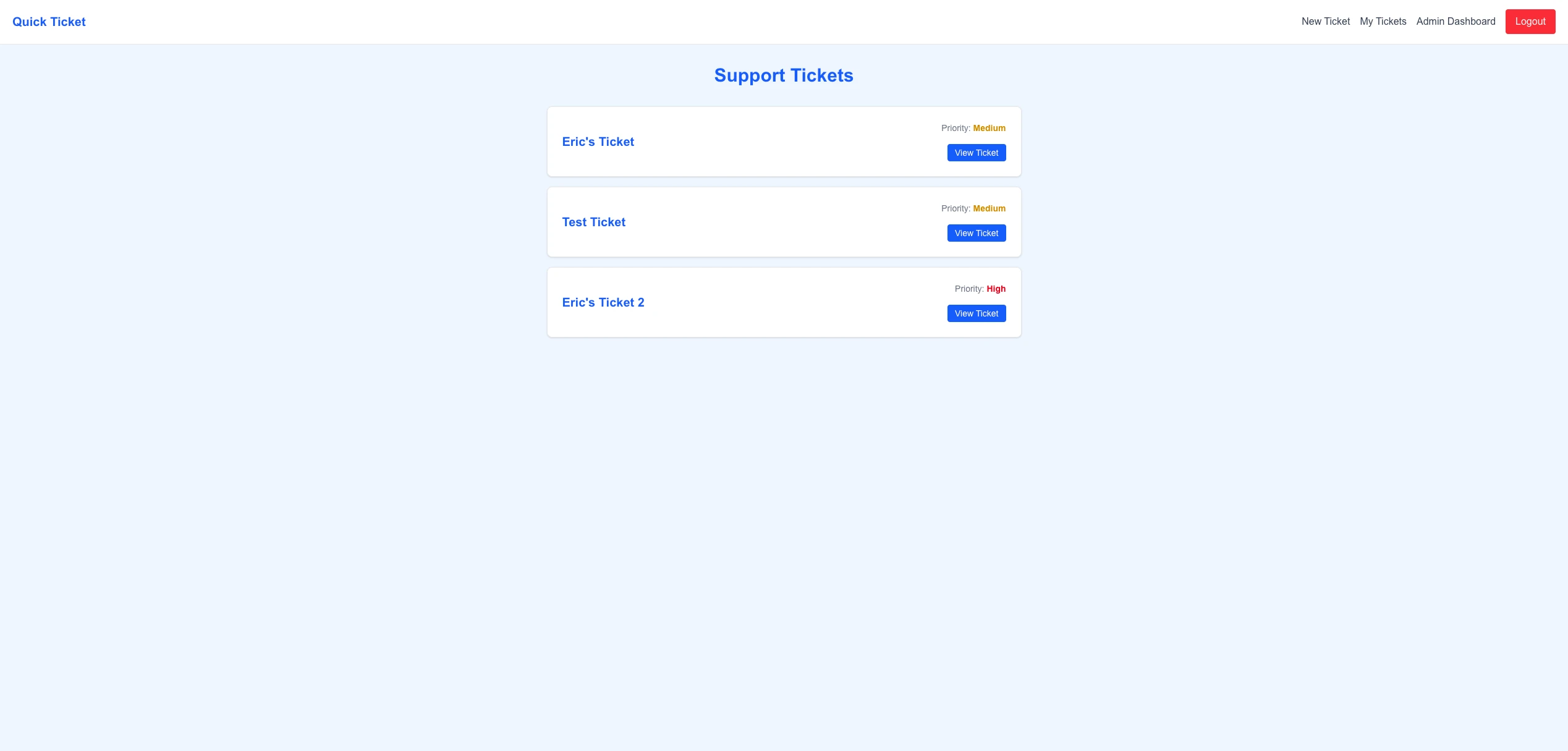
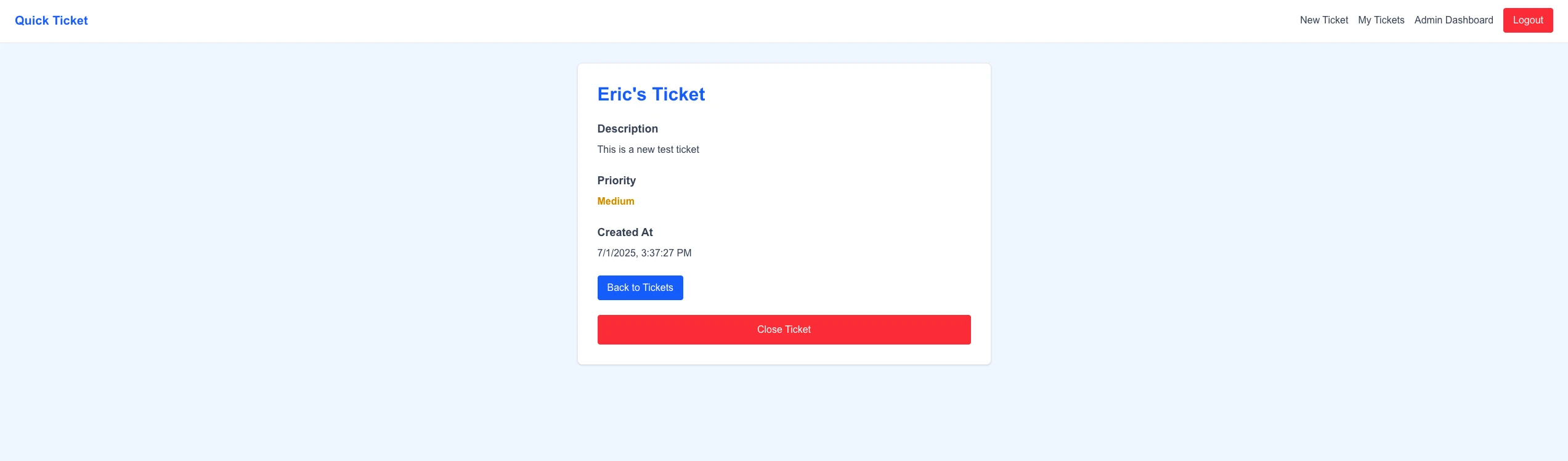
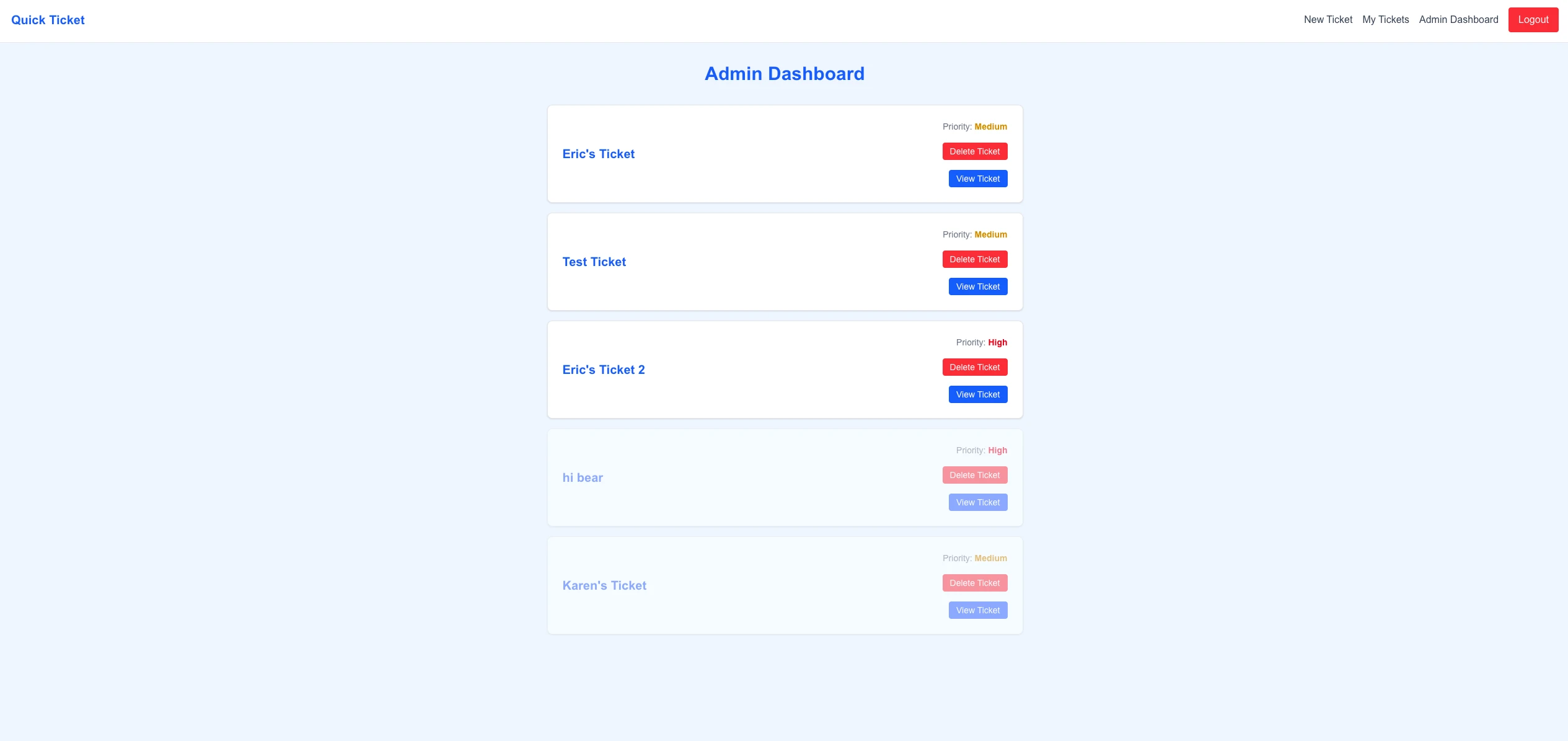
Quick Ticket provides a clean web interface where users can submit support tickets. Each ticket is stored in a PostgreSQL database, allowing support requests to be tracked and organized.
The application was designed with a modern full-stack architecture that emphasizes:
- scalability
- maintainability
- developer experience
To improve reliability, the project also integrates Sentry for error tracking and performance monitoring.
Key Features
- Simple Ticket Submission: Users can quickly submit IT support requests through a clean and intuitive form interface.
- Full-Stack Architecture: The project uses Next.js to handle both the frontend interface and backend functionality.
- Database Integration: Support tickets are stored in a PostgreSQL database, allowing requests to be reliably stored and managed.
- Error Monitoring & Performance Tracking: The application integrates Sentry to capture runtime errors and track performance issues. This allows developers to quickly identify and resolve problems in production.
- Type-Safe Development: Using TypeScript improves maintainability and reduces bugs by enforcing static typing.
- Responsive Design: The interface is fully responsive and works across desktops, tablets, and mobile devices.
Technologies Used
- Next.js: A powerful React framework used to build modern full-stack applications with server-side capabilities.
- TypeScript: Adds static typing to JavaScript to improve code quality and maintainability.
- Prisma ORM: A modern ORM that simplifies working with relational databases using type-safe queries.
- PostgreSQL (via NeonDB): A serverless PostgreSQL database used to store and manage support tickets.
- Tailwind CSS: A utility-first CSS framework used to build responsive user interfaces quickly.
- Sentry: Used for error monitoring and performance tracking to improve application reliability.
Observability and Monitoring
Modern applications require visibility into errors and performance. Quick Ticket integrates Sentry to monitor runtime errors and track performance metrics. This helps identify issues quickly and provides valuable insights into how the application behaves in production environments. Read More About Sentry
What I Learned
Building Quick Ticket helped reinforce several important full-stack development concepts:
- Designing a clean database schema for application data
- Using Prisma ORM to manage database interactions
- Implementing error monitoring and observability
- Structuring a Next.js full-stack application
- Building responsive user interfaces with Tailwind CSS
It also demonstrated the importance of production-level tooling, such as monitoring and error tracking, even in smaller applications.
Github Repo
View Github Repo
Conclusion
Quick Ticket demonstrates how modern technologies like Next.js, TypeScript, Prisma, PostgreSQL, and Sentry can be used to build practical full-stack applications.
By combining a clean user interface, database integration, and real-time monitoring, the project provides a strong foundation for building a more advanced help desk or ticket management platform.
Screenshots